
Before you cut: 5 habits for a better weekend build.
Good projects start before the saw comes out. A few simple habits can make your next afternoon in the shop a whole lot smoother.

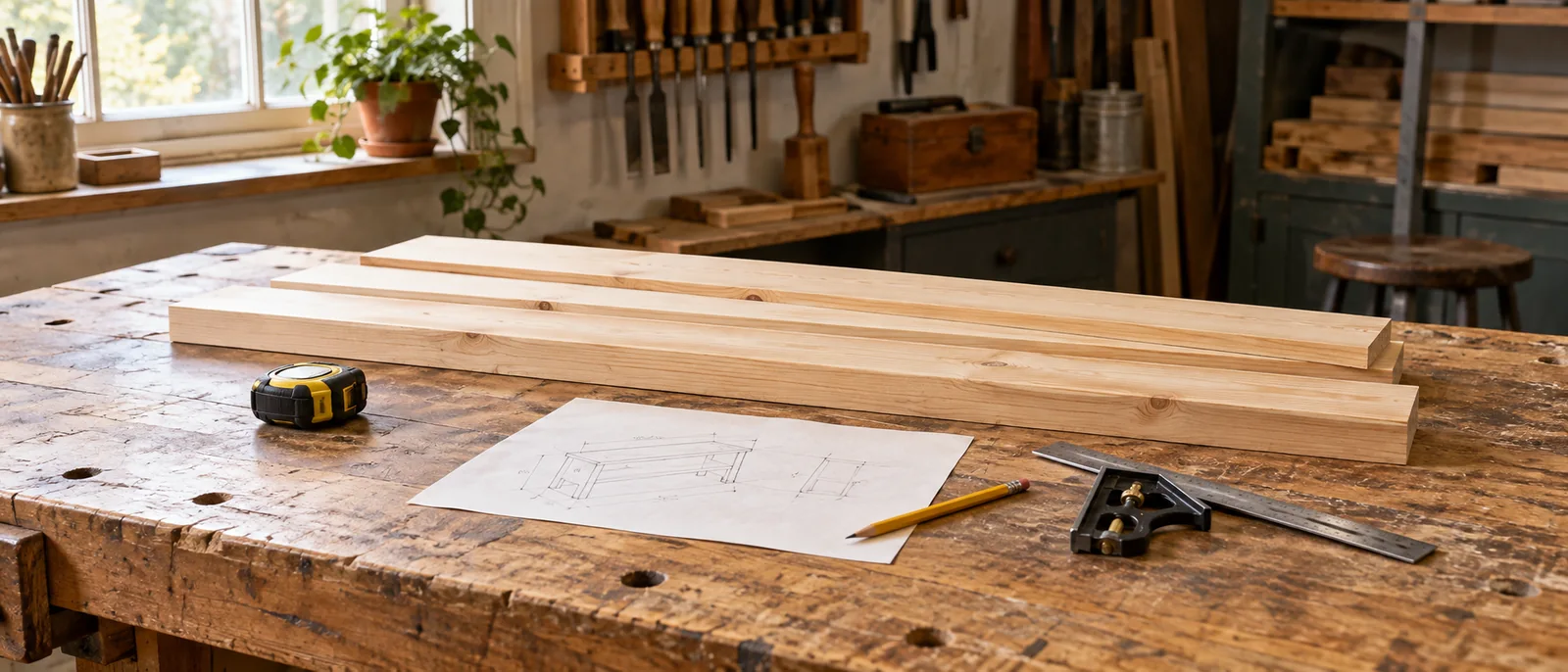
You’ve got a free Saturday, a stack of boards, and a project you’ve been wanting to build. It’s tempting to get straight to the cutting.
First, give yourself a few minutes to get organized. A missed dimension or an unlabeled part is much easier to sort out on paper than halfway through assembly. These five habits are a useful place to start, whether you’re making a small shelf or tackling a bigger build.
01 / GET THE WHOLE PICTURERead the plan all the way through.
Before you pick up a board, follow the project from the materials list to the last assembly step. Look at how the parts connect. Notice which edges will show and which pieces need to fit between others.
If a step is unclear, stop there and work it out. Make a quick sketch or lay out a few scraps to picture the joint. You want to understand what you’re building before you start making parts for it.
02 / KNOW YOUR MATERIALCheck the boards you actually have.
Measure your stock instead of relying on the label. Lumber names and actual dimensions can differ, and the thickness of a board matters when another part has to fit against it.
Take a look along each board for bends, twists, cracks, and knots. Decide which face you want to show. Mark any areas you need to avoid, then compare the usable material with your cut list. This is the moment to discover that a board won’t do the job.
03 / KEEP IT SIMPLEGive every part a name.
Two sides, a top, a bottom, a back. They sound easy enough to remember until several similar pieces are sitting on the bench.
Use light pencil marks to label each part in a place that won’t show. Mark the reference face and orientation when it matters. Match your labels to the drawing so “left side” means the same thing on the bench as it does on the page.
“Make the next step obvious before you finish the one you’re on.”
04 / THINK ONE STEP AHEADLay out the cuts before making them.
Work through your cut list on paper, then mark the layout on your stock. Leave room for the material the saw blade removes between pieces. A board that adds up perfectly on paper may fall short once you account for each cut.
Mark the waste side of your lines. For repeated parts, think through how you’ll keep their dimensions consistent with your tools and the plan’s instructions. Check the first piece before moving on to the rest.
05 / MAKE ROOM TO WORKSet up for the next step.
Clear enough space to lay out your parts and read your plan. Put the measuring and marking tools within reach. Before assembly, gather the hardware and clamps the project calls for, and check how the pieces fit without glue where the design allows.
Keep the work area and walking space clear. Follow the safety instructions for your tools, including the specified work support, guards, eye and hearing protection, and dust control. An organized bench helps you pay attention to the job in front of you.
Before-you-cut checklist
Tick these off before starting your next project. Checks reset when you reload.
You don’t need to turn a Saturday project into a paperwork exercise. Just take a little time to make the next steps clear. Then you can get on with the part you came for: building something with your own hands.
Make it a great day in the shop.