
Make Your Entryway Work Better With a Few Simple Changes
Create places for shoes, coats, and everyday carry items while keeping the route through the door clear.

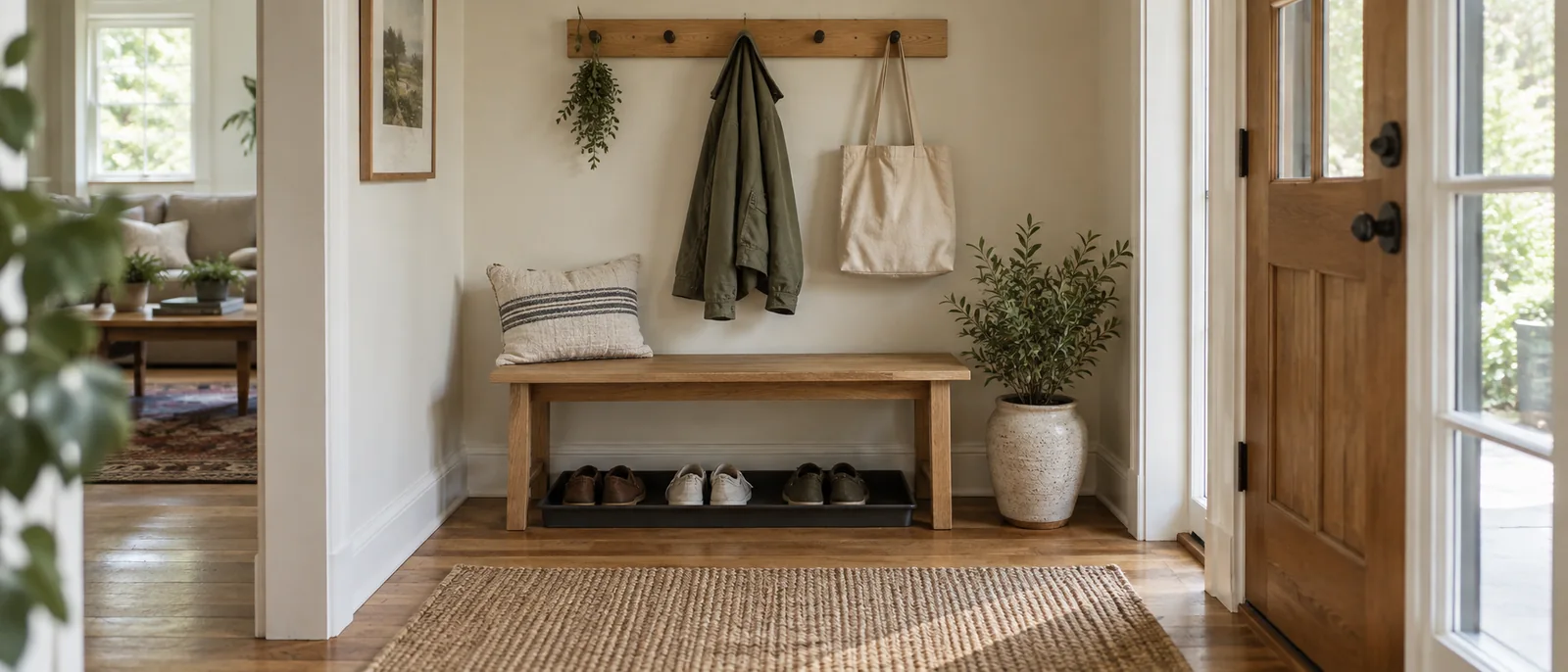
An entryway collects the things people carry, wear, and put down in a hurry. Before adding a hall tree or building a bench, observe what actually arrives at your door. The right arrangement should make coming home easier without turning the entrance into another obstacle.
01 / HOME PRACTICEWatch the first minute inside
Notice where keys land, where wet shoes stop, and what happens to a bag while someone removes a coat. Include the needs of everyone who regularly uses the entrance. A solution designed around one person’s habits may leave the original pile in place.
Write a short list of what belongs here every day. Separate those items from seasonal extras and objects that need to go elsewhere. The entrance should support arriving and leaving, rather than becoming permanent storage for everything without an assigned place.
02 / HOME PRACTICEProtect the walking route
Measure with the door fully open and consider how people pass one another. Include access to locks, switches, and any nearby closet. Mark a proposed bench or cabinet footprint temporarily so you can assess the remaining space before buying or building it.
Keep exits and circulation clear. Choose a mat that lies flat and does not obstruct the door, and avoid placing loose baskets where feet naturally land. If the space is narrow, a shallow wall-mounted solution may serve better than furniture that fills the floor.
03 / HOME PRACTICEGive each item a modest amount of space
A small tray can hold keys; a few correctly mounted hooks can hold frequently used coats. Match hardware and fixings to the wall and anticipated load, checking for hidden services before drilling. Do not treat a decorative hook as unlimited storage for heavy bags.
If you add a bench, choose one designed to support seated use and follow any anchoring requirements. Give damp footwear a suitable tray or surface that is easy to clean. Aim for an arrangement that can be reset in a minute at the end of the day.
04 / HOME PRACTICETest the arrangement during a busy week
Use the new setup before adding decorative pieces. Check it after a rainy day, a grocery trip, and a rushed morning. Those moments reveal whether the hooks are reachable, the shoe area is adequate, and the door still has a comfortable path.
Move infrequently used items elsewhere when the entrance starts filling up. Leave some empty capacity for a visitor’s coat or an unexpected delivery. An organized entryway works because its limits are clear, not because every available surface contains another storage accessory.
Your home improvement checklist
Tick these off as you prepare. Checks reset when you reload.
A good entryway gives everyday belongings a convenient stopping place. Keep the route clear and let your household’s actual habits guide the details.
Make your home work a little better.