
Before You Hang a Shelf: Check the Wall and Plan the Load
Plan the wall fixing, shelf depth, and intended contents before drilling the first hole.

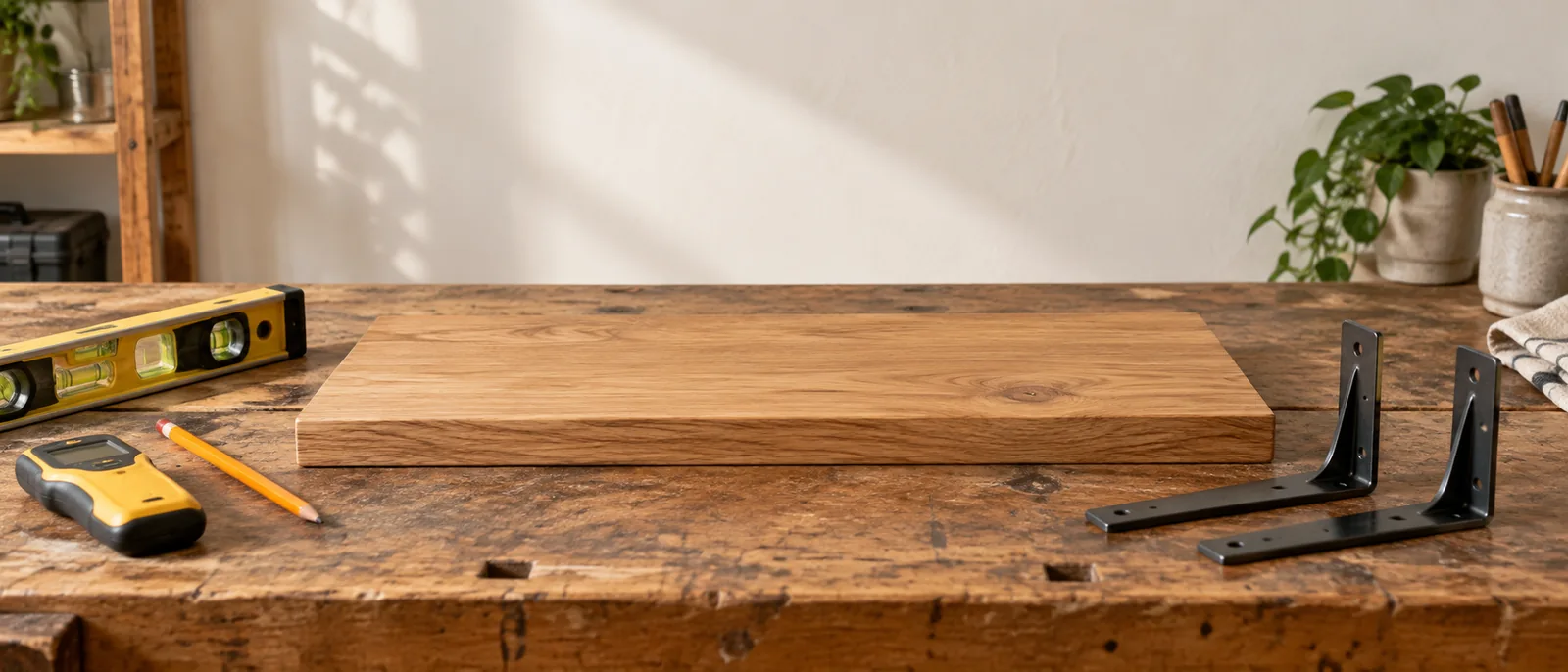
A shelf begins as a line on the wall, but its job is to support real objects above real people and furniture. Before choosing brackets for their appearance, decide what the shelf will hold and how that weight will connect to the building behind the finish.
01 / HOME PRACTICEList what belongs on the shelf
Set the intended contents together and estimate their total weight, including the shelf itself. Books, dishes, and decorative pieces behave very differently as a collection. Consider how the shelf might be used later so a light display does not quietly become heavy storage.
Think about depth as well as length. Deep objects can push weight farther from the wall, while an oversized shelf may intrude into a walkway. Make a paper or cardboard outline and view it from the doorway before deciding on the final position.
02 / HOME PRACTICEIdentify the wall construction
Determine whether you are working with drywall over framing, masonry, or another construction. Locate appropriate structural support and investigate the route of concealed wiring and plumbing before drilling. A stud finder is an aid, not a guarantee that every hidden obstacle is identified.
If the construction or utility route remains uncertain, get qualified help. Do not choose a fixing by its color or a generic weight printed on a package. The wall material, installation details, bracket design, and loading conditions all affect the finished assembly.
03 / HOME PRACTICETreat the parts as one system
Use shelf, brackets, and fasteners compatible with the manufacturer’s requirements. Follow the specified bracket spacing, screw dimensions, and fixing method. An impressive rating for one anchor does not establish the capacity of a shelf assembled from unrelated parts.
Check that the shelf thickness and material suit the support spacing. Prepare the correct tools and read the installation sequence before marking holes. It is easier to change the design on paper than to work around misplaced holes and damaged wall material.
04 / HOME PRACTICEInstall carefully and keep the use consistent
Follow the product instructions and check alignment as you work. Keep people and fragile objects out of the area until installation is complete. Do not test a shelf by hanging from it or using your body weight as an improvised load test.
Once installed, use it within the specified limits and inspect it if anything shifts, loosens, or changes. Tell other household members what belongs there. A shelf remains useful when its everyday contents match the purpose and support system you planned.
Your home improvement checklist
Tick these off as you prepare. Checks reset when you reload.
A level shelf is only part of a good installation. The more important work is choosing a support system appropriate to the wall and the things you intend to store.
Make your home work a little better.