
A Better Glue-Up Starts Before You Open the Bottle
Rehearse the assembly, prepare your clamps, and check the adhesive instructions before the clock starts.

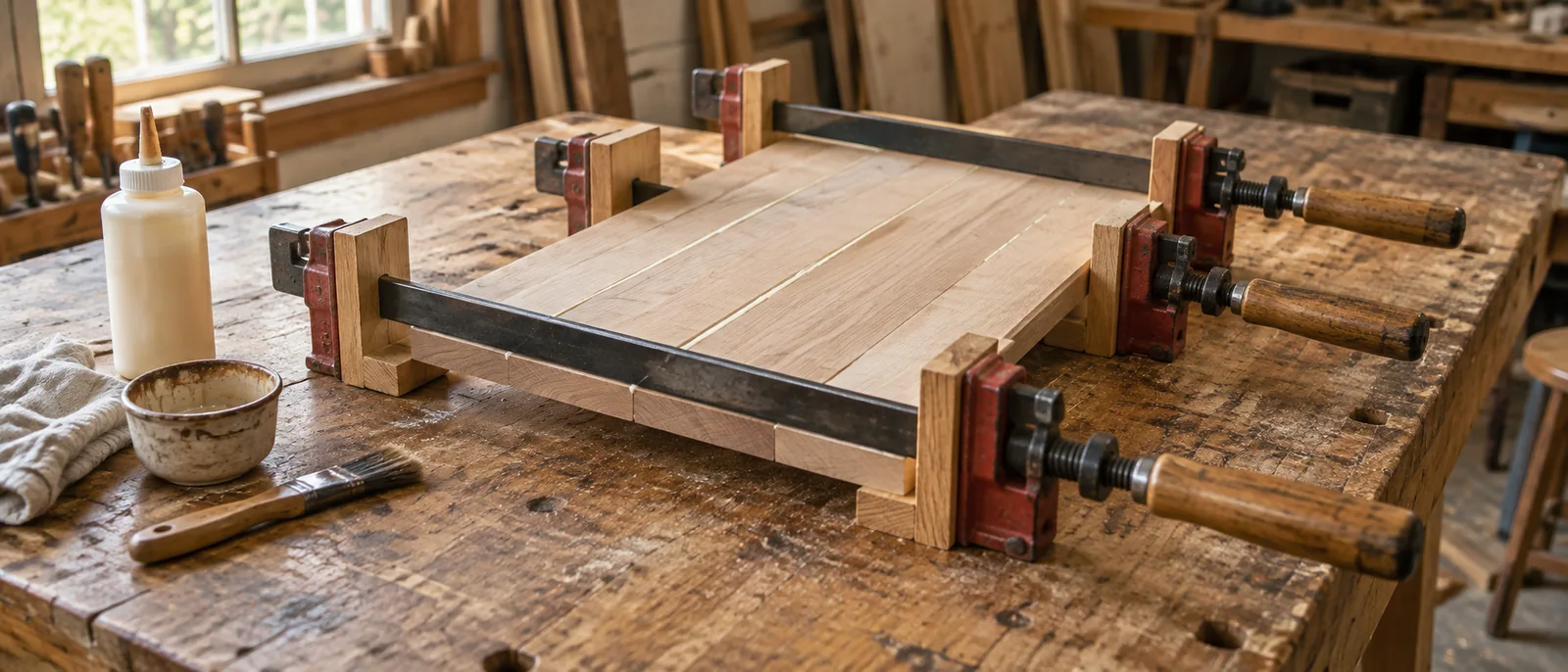
Glue-up is a poor time to discover that a clamp will not reach or a panel is facing backward. Make those discoveries during a rehearsal, when you can still stop and think.
01 / WORKSHOP PRACTICERehearse without adhesive
Lay out the prepared parts in assembly order and label their orientation. Where the joint design allows, bring them together without glue. Confirm that you understand how one part enters the next and which pieces must go in first.
Work through the awkward moves as well as the easy ones. Can you reach the last joint without turning the entire assembly over? Where will the project rest when it is together? Write a short sequence if there are enough parts to make the order confusing.
02 / WORKSHOP PRACTICESet out the equipment
Open the clamps to the approximate span and position suitable protective pads. Keep the measuring tools available so you can check the assembly as you work. Put the glue applicator, product instructions, and appropriate cleanup supplies within reach.
Make a practice run with the planned clamps. Check for interference with other parts or access you will need later. A clamp that technically reaches can still be awkward to position. Fix the arrangement now, while moving it does not interrupt adhesive application.
03 / WORKSHOP PRACTICEFollow the glue's working conditions
Choose an adhesive suitable for the materials, joint, and environment. Check its temperature requirements, assembly time, clamp guidance, and cure instructions. Open time, time in clamps, and readiness for service are different stages; use the product's guidance rather than a universal overnight rule.
Mating surfaces should fit properly before adhesive is added. Apply the product and clamp as directed. Do not depend on ordinary wood glue to correct a badly fitted joint. For product-specific preparation and timing, consult the manufacturer's technical guidance linked below.
04 / WORKSHOP PRACTICECheck, then leave it undisturbed
Inspect alignment and joint seating during assembly, while adjustment is still possible within the product's working time. Protect the project from being bumped by the next task. Leave a clear note with the assembly time and the instructions you need to follow next.
Plan the next workshop job somewhere else. It might be marking hardware positions on another component or organizing the remaining parts. A clear place for the assembly to rest prevents the temptation to move it simply because it is occupying your only bench.
Your workshop checklist
Tick these off as you prepare. Checks reset when you reload.
The best time to make a glue-up less stressful is before the adhesive comes out. Rehearse the difficult move once, and you will know what to do when it matters.
Further reading: Titebond: wood glue application and timing guidance.
Make it a great day in the shop.