
Your First Compost Pile Without the Guesswork
Start with suitable ingredients, manageable moisture, and a simple way to track what goes into the pile.

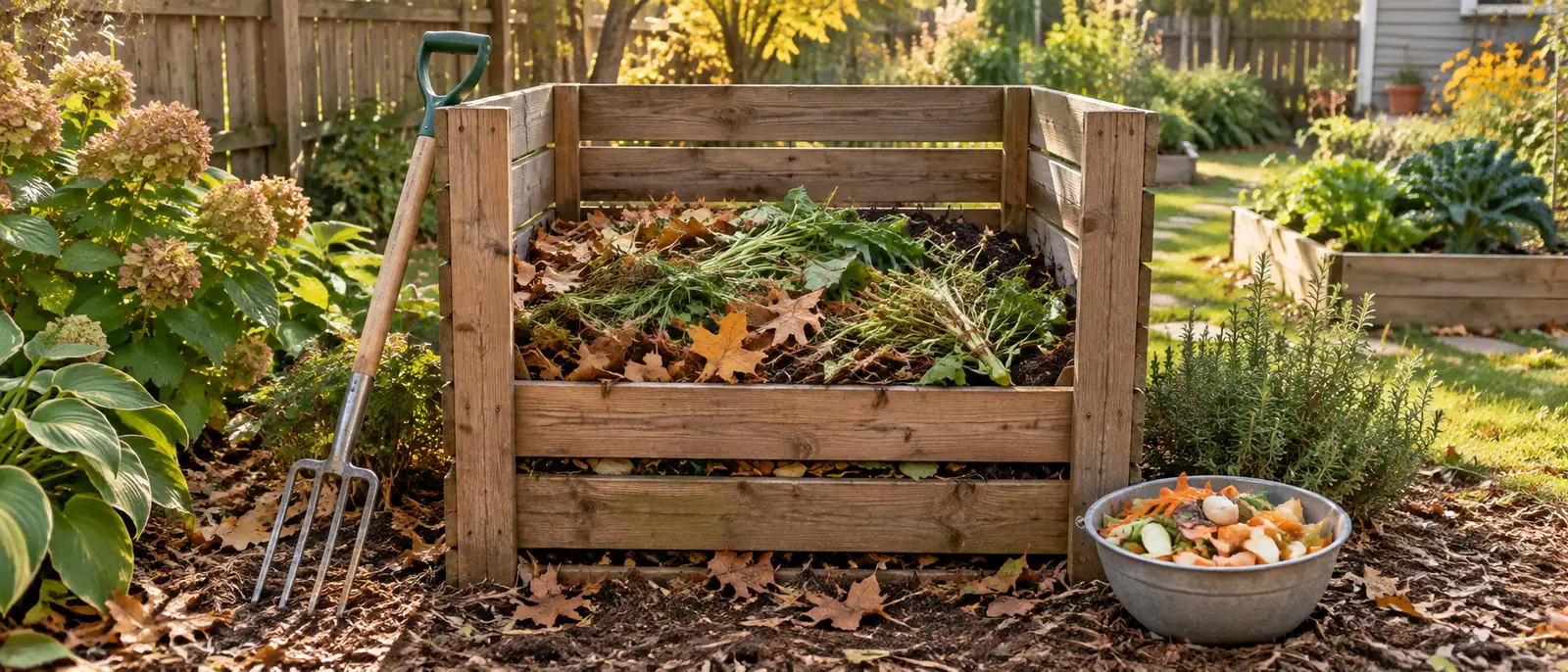
Composting does not require an elaborate station. It does require knowing what you are collecting and being willing to check the pile occasionally. Start with a system that fits the amount of material your household and garden produce.
01 / GARDEN PRACTICEChoose a practical place
Locate the system where you can reach it comfortably with a small bucket or garden cart. Leave room to open a bin, mix material, and remove finished compost. Follow local rules and choose a design that helps manage animal access where that is a concern.
Picture the task in ordinary weather, not just on a pleasant weekend. If emptying the kitchen container requires navigating stored tools and a muddy corner, the habit may not last. Make the route simple and keep the tools nearby.
02 / GARDEN PRACTICEKeep the ingredients straightforward
Mix dry carbon-rich materials such as fallen leaves with nitrogen-rich materials such as vegetable scraps and fresh plant trimmings. Avoid meat, dairy, oils, pet waste, plastics, and chemically contaminated material in a basic home pile. Keep a supply of dry leaves available when adding moist scraps.
Set aside doubtful items until you have checked a reliable guide. A household collection container is easier to use when everyone knows what belongs in it. A short list beside the container can prevent repeated sorting at the outdoor bin.
03 / GARDEN PRACTICECheck moisture and air
A working pile should be moist rather than waterlogged. Mix compacted material to restore air, and adjust wet or dry ingredients when conditions call for it. Strong unpleasant odors or an extremely dry pile are reasons to investigate the balance rather than simply adding more scraps.
Make a note after an adjustment and check the result later. Choose a passive or more actively managed method according to the effort you can provide. Do not expect the same speed from every pile, especially across changes in season and weather.
04 / GARDEN PRACTICESeparate fresh additions from finished material
Finished compost should be dark, crumbly, and earthy-smelling, with most original ingredients no longer recognizable. Allow appropriate maturation before use. A home pile that has not been managed and monitored for sufficient heat should not be assumed to destroy weed seeds or plant pathogens.
Give batches an identity: a date on a notebook page is enough. If you continually add fresh scraps to one pile, distinguish those additions from material that is ready. This makes it easier to avoid spreading a mixture that still contains a large proportion of undecomposed waste.
Your garden checklist
Tick these off as you prepare. Checks reset when you reload.
Keep the first system understandable. Once you can recognize how the pile responds, adjusting the routine becomes much easier than following a rigid recipe.
Further reading: University of Maryland Extension: making compost at home.
Make it a great day in the garden.