
Mulch Matters: Cover Your Soil the Right Way
Choose a suitable covering and apply it with room for stems, water, and young plants.

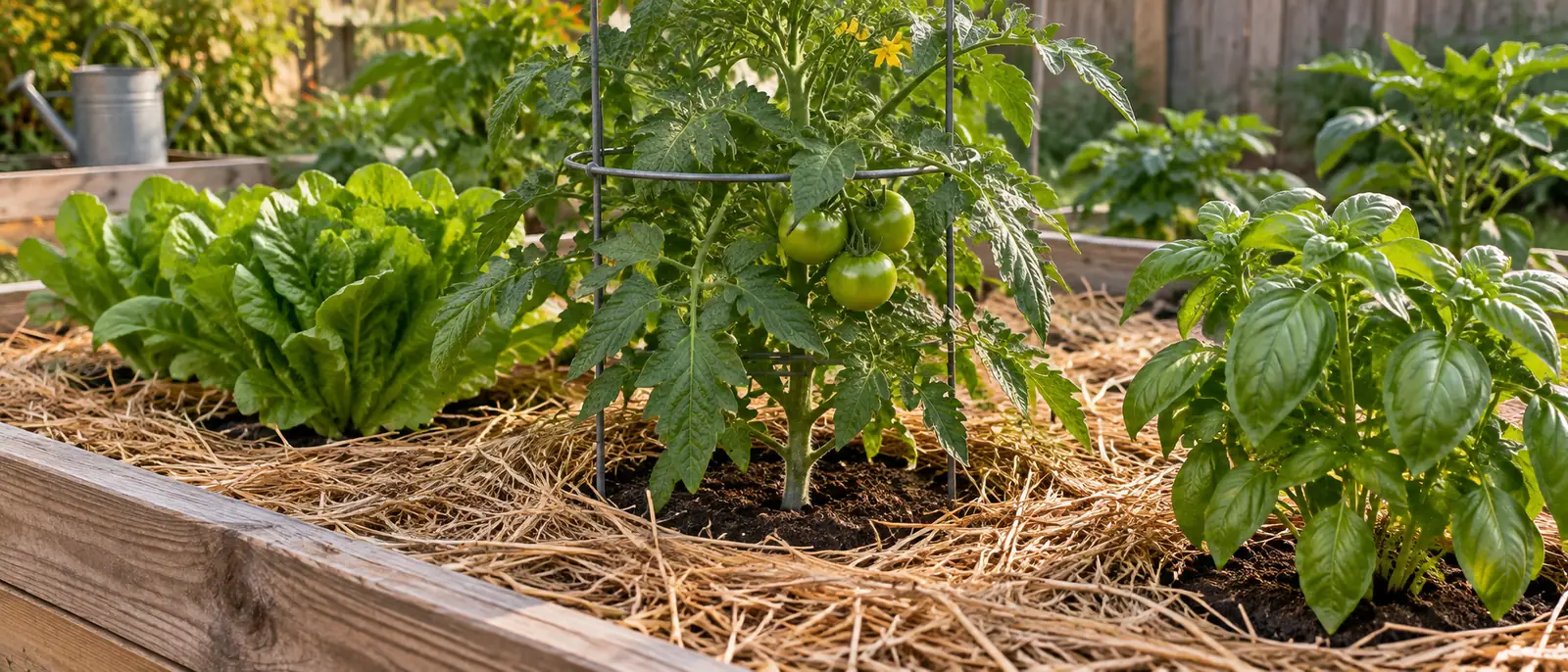
Bare ground between plants quickly becomes another area to manage. Mulch can help, but the material and placement matter. Treat it as part of the planting system rather than something to spread as thickly as possible.
01 / GARDEN PRACTICEChoose material for this bed
Clean straw or suitable shredded leaves can be useful around vegetables. Consider availability, weed seeds, possible herbicide contamination, and how the material will break down. A mulch that works around established landscape plants may be awkward around newly sown vegetable rows.
Inspect the material before spreading it. Ask about its source when buying or accepting a load, and keep packaging or supplier details. Avoid assuming that any free organic material is suitable for a food garden simply because it came from somewhere outdoors.
02 / GARDEN PRACTICEPrepare the area first
Remove existing weeds and check moisture before covering the soil. Mulch is easier to place around visible, established seedlings than over rows where tiny shoots have not emerged. Account for soil temperature and crop timing; insulating a cold bed may delay warming when warmth is needed.
Mark rows clearly so you can see where the crop belongs. Work on a small section first and inspect the result from above. It should remain easy to find the stems, planting line, and irrigation parts after the covering is in place.
03 / GARDEN PRACTICELeave space at stems
Spread an appropriate layer for the material and crop, following local Extension guidance. Keep mulch away from direct contact with plant stems rather than piling it against them. Avoid dense mats that shed water or prevent you from seeing what is happening underneath.
Water and then check below the mulch to confirm moisture reaches the soil. A damp-looking covering is not proof that the root area received water. Look around emitters and newly planted areas, especially after adjusting an irrigation system.
04 / GARDEN PRACTICEMaintain the covering
Inspect periodically for weeds emerging through gaps, displaced material, and signs of pests. Replenish as needed when organic mulch settles or decomposes. Do not keep adding layers without checking the depth and the condition of the soil below.
At the end of the season, record which material was easy to handle and which created extra work. A bed exposed to wind may need a different approach from a sheltered corner. Keep those observations with your planting notes so the next application starts with useful evidence.
Your garden checklist
Tick these off as you prepare. Checks reset when you reload.
Good mulching leaves the bed easier to care for. Keep the plants visible, check underneath, and adjust the covering as the garden grows.
Further reading: University of Minnesota Extension: mulch and soil health.
Make it a great day in the garden.