
A Small Herb Garden Right Outside Your Door
Grow a useful collection of cooking herbs by matching each plant to its light, water, and container needs.

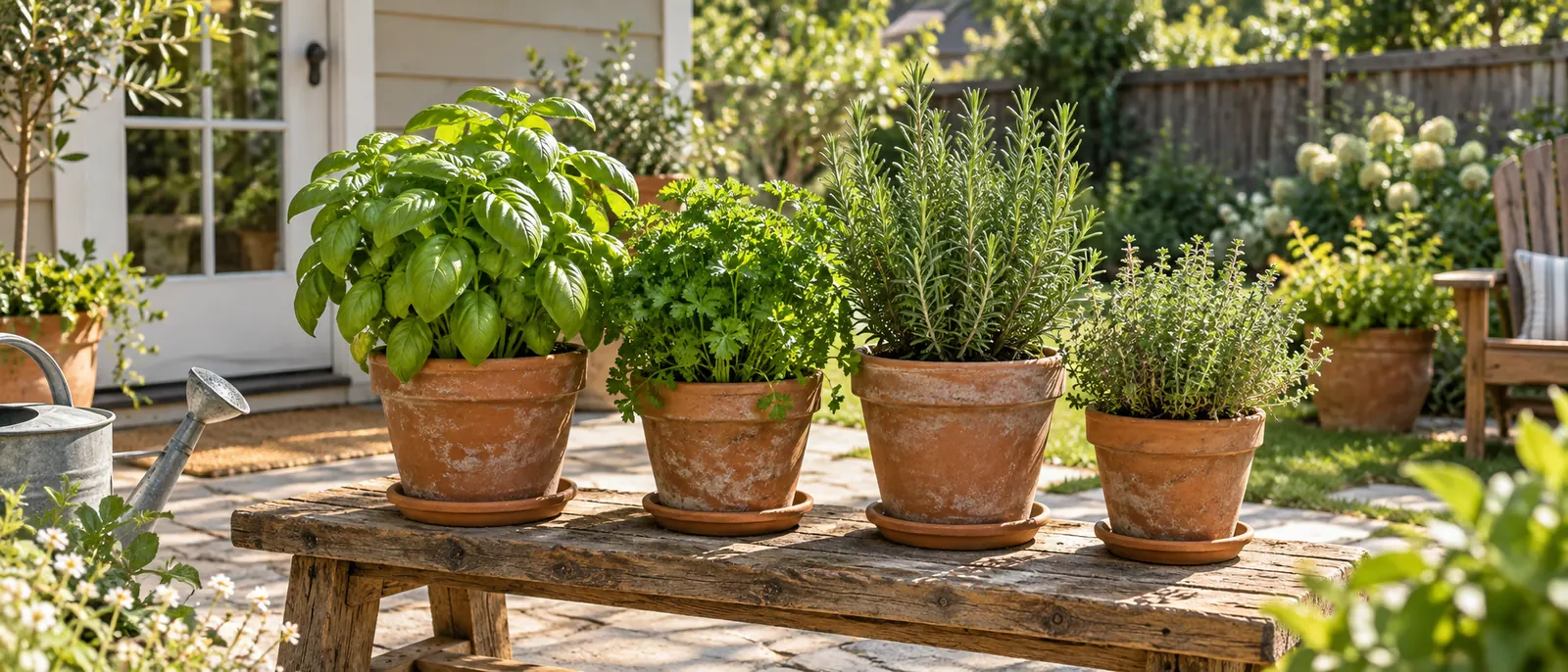
A few herbs near the kitchen can make a small garden feel useful immediately. Choose plants you already enjoy cooking with, then arrange them so checking and harvesting is a simple part of the day.
01 / GARDEN PRACTICEChoose herbs you will use
Start with a short list from your own cooking: perhaps parsley, basil, thyme, or rosemary. Read the requirements for each plant before combining them. Herbs are a broad group, and sharing a place in the kitchen does not mean they need identical growing conditions.
Write the plant names on a small plan and leave room for growth. Keep nursery labels or seed packets together. If you are unsure about identification, resolve it before harvesting; scent alone is not a dependable way to identify an unfamiliar edible plant.
02 / GARDEN PRACTICEMatch the spot to the plant
Check the actual light near the doorway throughout the day. Many familiar culinary herbs prefer a sunny location with good drainage, but species and climate affect the best arrangement. A bright-looking porch under a roof may receive little direct sunlight.
Use a local growing guide to choose varieties and seasonal timing. Think about reflected heat from walls and paving as well as light. A convenient spot is valuable only if the plant can cope with the conditions there; a nearby alternative may work better.
03 / GARDEN PRACTICEUse separate pots when needs differ
Choose containers with drainage and adequate root space. Separate pots make it easier to manage herbs with different moisture preferences. Rosemary and thyme generally favor better-drained, less constantly moist conditions than basil and parsley. Keep mint contained if you do not want it spreading through a bed.
Group pots so you can reach every one for inspection. Check moisture individually instead of giving the whole collection the same amount of water. Keep runoff from creating a slipping hazard near the doorway, and account for the weight of filled pots on shelves or stands.
04 / GARDEN PRACTICEHarvest and observe regularly
Use clean tools and species-appropriate harvesting methods, leaving enough healthy growth for the plant to continue. Check for pests and remove damaged material as appropriate. Follow local guidance for feeding and overwintering rather than treating every herb as a permanent outdoor plant.
Keep a note of which herbs you actually reach for and which remain untouched. At the end of the season, adjust the collection to suit your cooking and the space. A few healthy plants you use often are more rewarding than a crowded display selected only for appearance.
Your garden checklist
Tick these off as you prepare. Checks reset when you reload.
Build the herb garden around your everyday habits. Place the right plants where you can notice them, and a small collection can become a useful part of the kitchen routine.
Further reading: University of Minnesota Extension: growing herbs.
Make it a great day in the garden.