
From Seed Tray to Garden: Help Seedlings Settle In
Introduce young plants to outdoor conditions gradually and prepare the bed before transplanting.

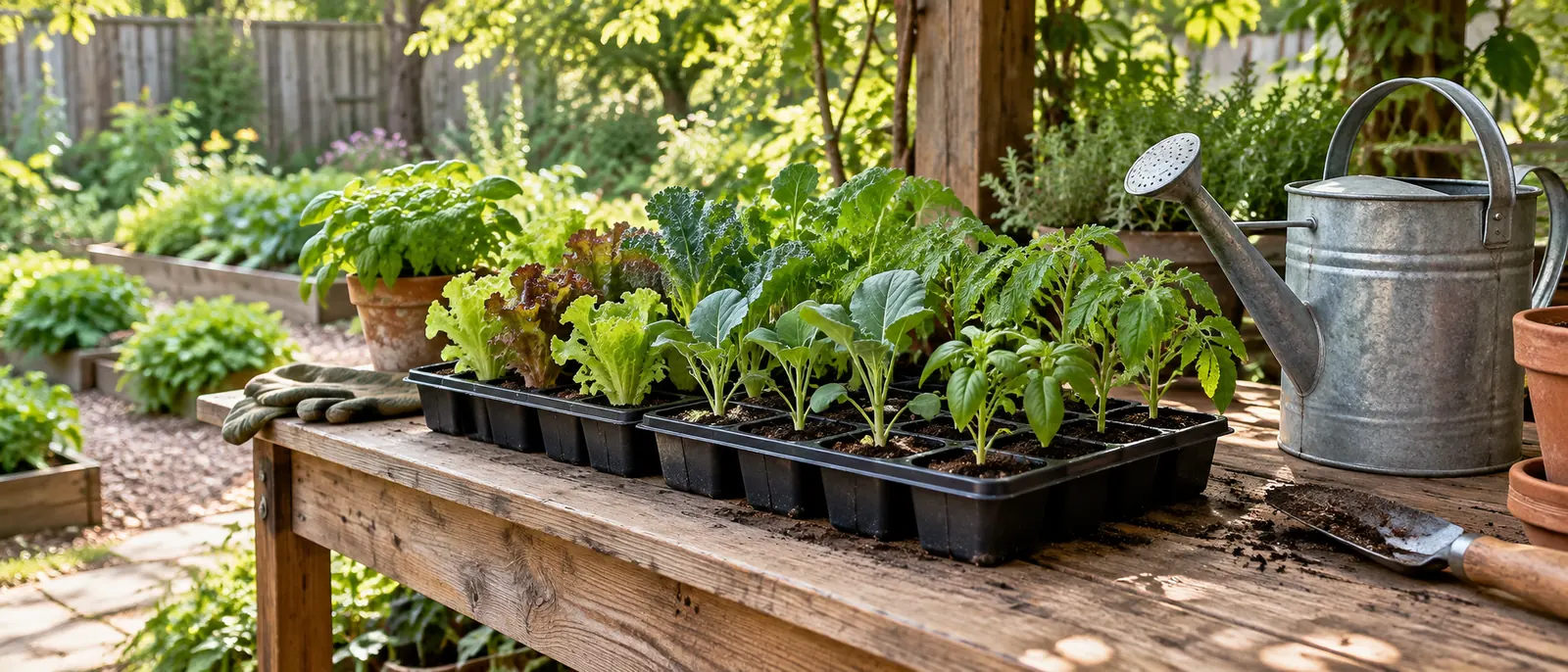
A seedling raised indoors has not experienced the same sun, wind, and temperature swings as a plant already growing outside. Moving the tray straight into an exposed bed asks it to handle several changes at once.
01 / GARDEN PRACTICECheck whether the garden is ready
Use crop-specific local guidance to decide when to transplant. Consider frost risk, soil conditions, and the forecast, not just the size of the seedling. Warm-season crops and cool-season crops need different timing; being ready to leave the tray is not the same as having suitable conditions outside.
Prepare the destination before starting. Mark the spacing, arrange supports where required, and make sure water is available. A tray waiting beside unfinished bed construction is harder to manage than seedlings moving into an area that is ready for them.
02 / GARDEN PRACTICEIntroduce outdoor conditions gradually
Hardening off means progressively exposing seedlings to outside conditions. Begin with a sheltered location and limited exposure, then increase it as appropriate for the plants and weather. Follow local crop guidance; many routines take roughly a week or two rather than a single afternoon.
Choose a place you can monitor easily and bring plants back under protection when needed. Strong wind, intense sun, or an unexpected cold night can undo careful preparation. Use reminders to check the tray, but let the actual conditions determine the next step.
03 / GARDEN PRACTICEKeep moisture under observation
Small cells can dry quickly outdoors. Check the growing medium and water gently as needed, while allowing drainage. Hardening off does not mean deliberately letting seedlings wilt severely or leaving them exposed to unsuitable temperatures.
Look across the tray for uneven growth or drying. Plants at an edge may experience different conditions from those in the center. If a group struggles, pause the progression and assess the cause instead of advancing exposure merely because another day has passed.
04 / GARDEN PRACTICETransplant with care
Handle seedlings gently and follow the crop's planting-depth guidance. Do not apply the deeper-planting technique used for some tomatoes to every species. Water appropriately after planting and keep watching the young plants while their roots establish in the new location.
Label the planting and note the date, weather, and any problems. Recheck the area after a windy day or a heavy shower. The first days in the bed are part of the transition, so keep your observations close at hand rather than considering the job finished when the tray is empty.
Your garden checklist
Tick these off as you prepare. Checks reset when you reload.
A gradual transition gives you time to notice problems while they are still manageable. Prepare the destination, watch the weather, and let the seedlings adjust at a sensible pace.
Further reading: University of Minnesota Extension: hardening and transplanting seedlings.
Make it a great day in the garden.