
Before You Spray: Take a Closer Look at Garden Pests
Identify the plant problem and its cause before choosing a response.

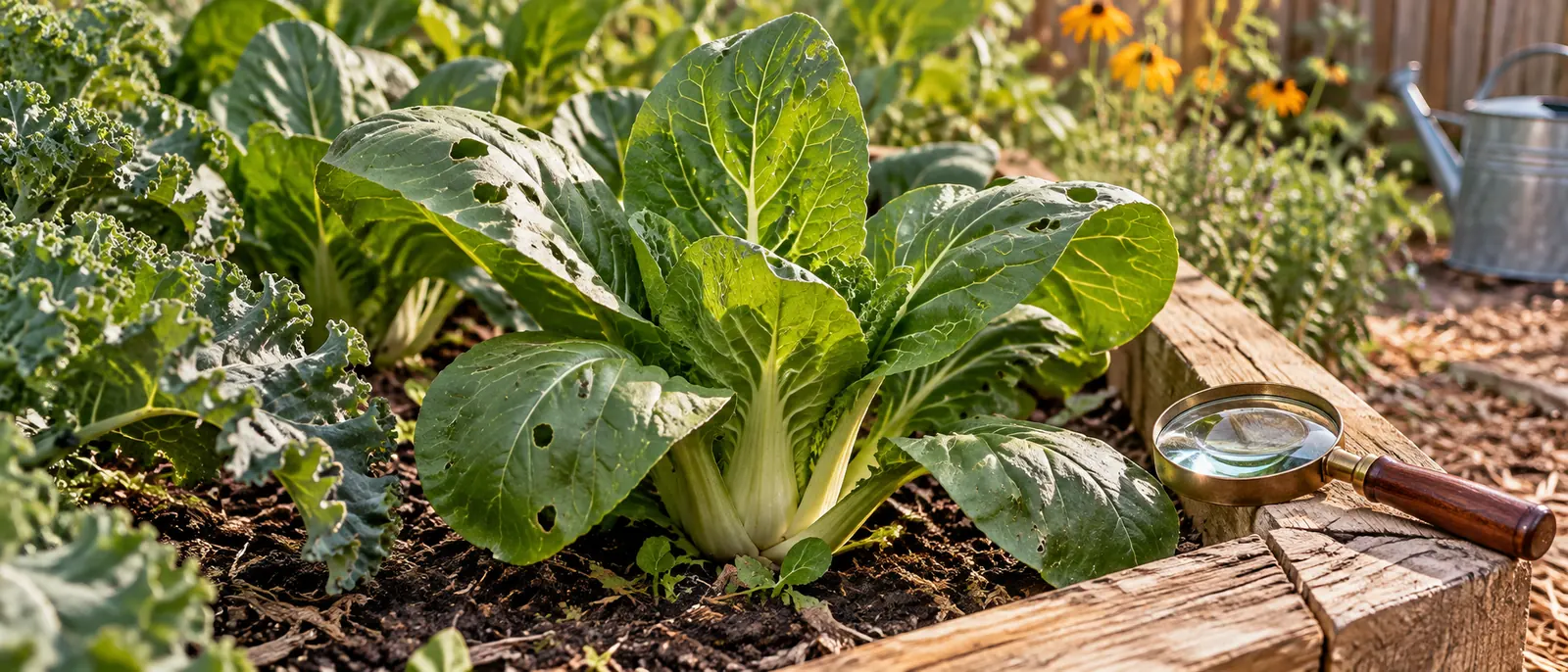
A hole in a leaf tells you something happened. It does not tell you what caused it, whether the cause is still present, or whether treatment is needed. Begin with a careful look rather than a product.
01 / GARDEN PRACTICEDescribe what you see
Check several plants, including healthy ones nearby. Note whether damage affects old leaves, new growth, stems, or fruit. Look at leaf undersides and inspect the soil area without unnecessarily disturbing the plant. Take clear photographs of the whole plant and close details.
Record when you first noticed the issue and whether it is spreading. A short note about weather, watering changes, and recent work can help explain symptoms. Keep observation separate from diagnosis: yellow leaves, for example, are not automatically evidence of an insect problem.
02 / GARDEN PRACTICEIdentify the cause
Use a reliable crop-specific Extension resource or ask a local plant clinic to help identify the problem. Some insects are beneficial, and an insect resting on a damaged plant may not have caused the damage. Water stress, disease, and physical injury can resemble feeding problems.
When asking for help, include the plant name, location, photographs, and your notes. Avoid applying something first and then trying to determine what was present. An accurate identification makes it easier to choose a response that addresses the cause.
03 / GARDEN PRACTICEDecide whether action is needed
Integrated pest management combines prevention, monitoring, and appropriate controls. A small amount of cosmetic damage may be tolerable. Depending on the identified problem, useful responses may include improving growing conditions, removing affected material, or using an appropriate physical barrier.
Check whether a proposed action interferes with pollination or traps an existing pest with the crop. Match the method to the plant and pest rather than treating every bed alike. Keep monitoring so you can tell whether the response actually changed the problem.
04 / GARDEN PRACTICEUse any product deliberately
If a pesticide is warranted, choose one labeled for the identified pest and crop and follow all label directions, including protection, application restrictions, and harvest intervals. Natural or organic branding does not make a product harmless. Avoid improvised mixtures and blanket spraying of unidentified insects.
Record what you did and reassess at an appropriate interval. If the result is unclear, get further advice rather than stacking treatments. Your garden notes should make the next decision easier, especially if the same problem returns in another season.
Your garden checklist
Tick these off as you prepare. Checks reset when you reload.
The most useful first tool is observation. Once you know what is happening, you can respond more precisely and avoid treating the wrong problem.
Further reading: University of Maryland Extension: integrated pest management.
Make it a great day in the garden.