
Simple Wooden Supports for a More Organized Garden
Match a stake or trellis to the plant, then plan stability, access, and seasonal maintenance.

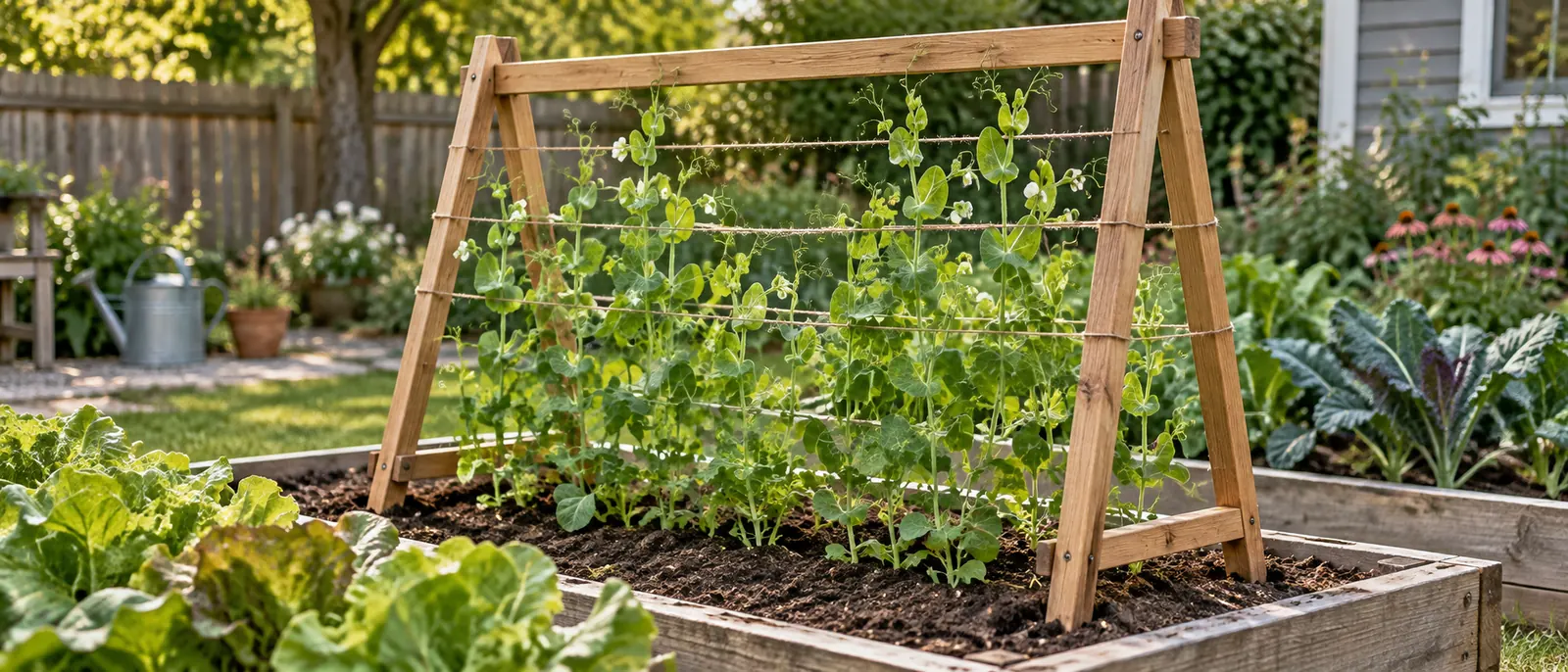
A garden support is a small woodworking project with a growing load attached to it. It needs to suit the plant and remain dependable after rain, wind, and a season of use—not just look tidy on planting day.
01 / GARDEN PRACTICEChoose the plant before the structure
Different plants climb or stand in different ways. Peas can grasp slender supports with tendrils; a tomato may need suitable tying or a cage rather than a decorative lattice. Check the variety's mature size and support requirements before deciding on height and spacing.
Sketch the support beside the mature plant, not just the seedling. Include room for harvesting and inspecting both sides. A structure that fits neatly into an empty bed may become difficult to use once leaves and fruit occupy the same space.
02 / GARDEN PRACTICEUse a proven shape
A stake, a framed trellis, or a braced A-frame can each be useful when correctly sized for the intended load. Follow a suitable plan and select outdoor-appropriate materials and fasteners. Do not treat a lightweight ornamental panel as a support for heavy fruit or vigorous vines.
Check the pieces before assembly and remove sharp splinters or exposed fastener points. If reusing wood, establish its condition and treatment history; avoid unknown chemically contaminated material in the garden. Keep construction details simple enough that you can inspect and repair them later.
03 / GARDEN PRACTICEInstall before the roots fill the bed
Position and secure the structure early, while access is easy and before driving supports risks extensive root disturbance. Account for wind and the weight of wet foliage and fruit. Choose anchoring and bracing suited to the site rather than copying a stake depth without considering the soil.
Check the path of hoses and the reach of harvesting tools. Place tall supports so their shade is considered in the planting layout. Walk around the installation and look for trip points, loose ties, or projecting ends at face level.
04 / GARDEN PRACTICEAdjust as the plant grows
Use ties and training methods appropriate to the crop, leaving room for stems to expand. Inspect for rubbing, constriction, loose connections, and leaning after bad weather. Heavy fruit may need additional support designed for that crop rather than relying on a thin vine alone.
At the end of the season, clear plant material and inspect the timber and hardware before storage or reuse. Record what worked: height, access, and ease of tying are all useful observations. The next version should solve a problem you actually experienced rather than simply becoming larger.
Your garden checklist
Tick these off as you prepare. Checks reset when you reload.
Build for the plant you will have later in the season. A simple, well-matched support can keep the garden easier to reach, inspect, and harvest.
Further reading: University of Minnesota Extension: trellises and cages.
Make it a great day in the garden.