
Start Small: Plan a Garden You Can Actually Maintain
Choose a manageable space, a few crops you enjoy, and a routine that fits your week.

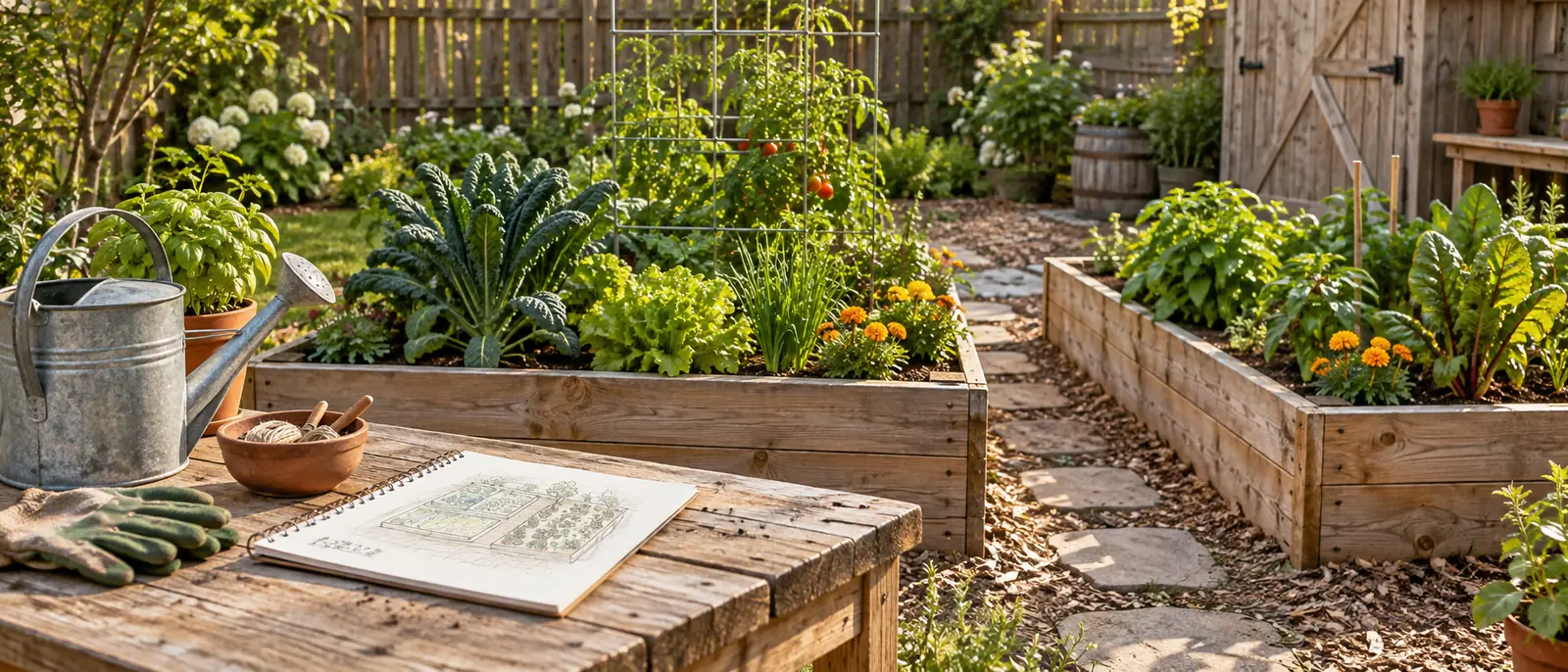
A garden begins with possibilities. The seed rack offers more varieties than you could grow in a season, and an empty corner of the yard looks full of promise. Start by deciding what you can comfortably look after, then give that first small planting your attention.
01 / GARDEN PRACTICEWatch the space before choosing it
Visit your proposed spot in the morning, at midday, and later in the afternoon. Note when buildings and trees cast shade and where water collects after rain. Match your crop choices to the light and drainage you actually have, rather than the conditions you hope to create.
Sketch the area with the water source, gate, and walking routes included. Imagine carrying a watering can there after a long day. A convenient location can make a small garden easier to keep up with than a larger plot at the far end of the property.
02 / GARDEN PRACTICEChoose a short list of useful crops
Write down a few vegetables or herbs you regularly eat. Check the mature size and recommended spacing for the varieties you are considering. A seedling occupies very little room at purchase; a mature plant may need much more space or a support.
For the first season, choose a small group you can recognize and monitor easily. Label each planting and keep the packets. Your goal is to learn what succeeds in this particular space, not to fit every attractive packet into a single bed.
03 / GARDEN PRACTICEUse a local planting calendar
Look up planting guidance from your state or county Extension service. Frost risk, soil conditions, summer heat, and crop requirements all affect timing. A calendar written for another region is useful background, but its dates are not instructions for your yard.
Put a few reminders on your own calendar: when to check conditions, when to prepare supports, and when to inspect the first seedlings. Leave room to delay planting if the weather is unsuitable. A planned date is a prompt to assess the garden, not a reason to ignore it.
04 / GARDEN PRACTICEPlan for ordinary weeks
List the recurring work: checking moisture, removing young weeds, inspecting plants, and harvesting. Consider who will handle these tasks while you are away. Keep basic tools together so a short garden visit does not begin with a search through the shed.
At the end of the season, record what you enjoyed eating and what demanded more time than expected. Photograph the layout and note changes you would make. Expand only where the experience suggests a real benefit; a well-kept small garden is already a worthwhile result.
Your garden checklist
Tick these off as you prepare. Checks reset when you reload.
Leave yourself room to learn. A few plants you can tend regularly will teach you more about your garden than a crowded plot you cannot keep up with.
Further reading: University of Maryland Extension: starting a vegetable garden.
Make it a great day in the garden.