
Loose Handles and Squeaky Hinges: Small Fixes Worth Doing
Inspect the hardware and its mounting before tightening, adjusting, or replacing anything.

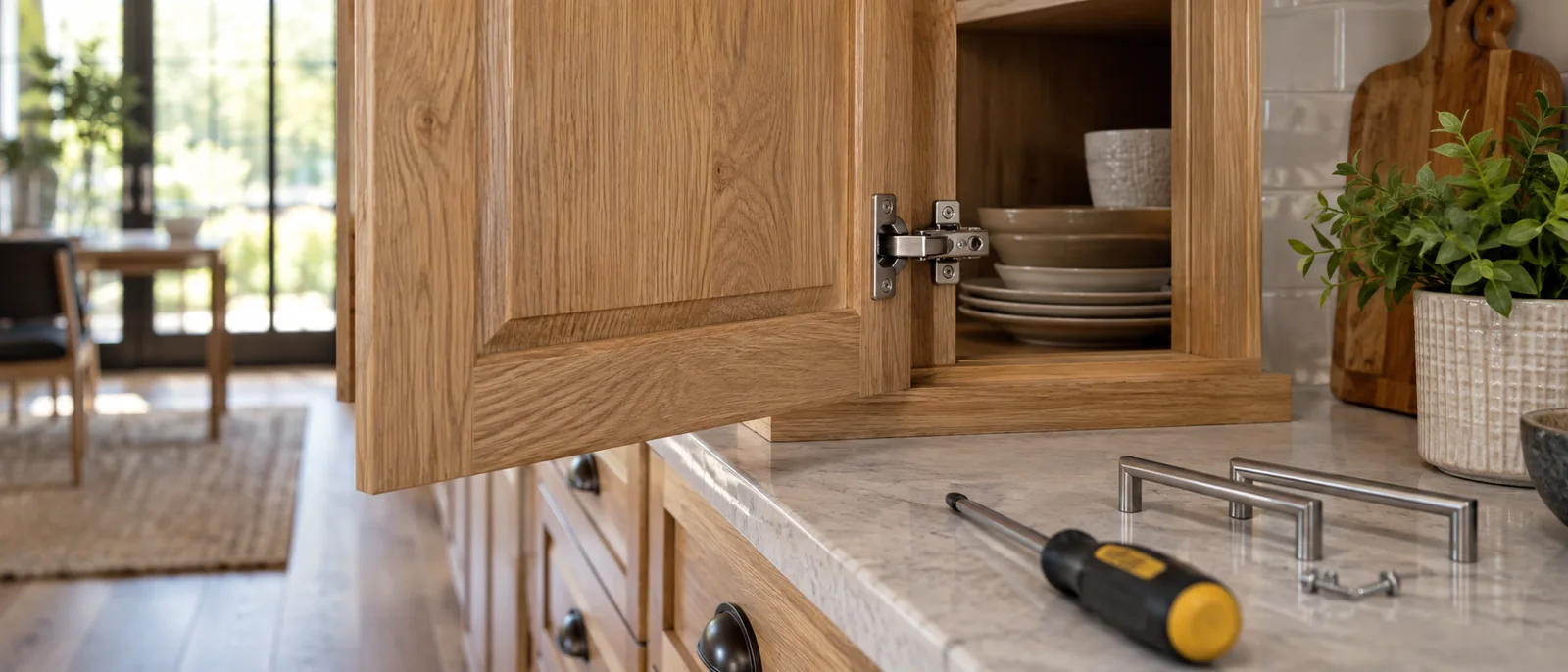
A loose pull or noisy hinge is easy to ignore until it becomes part of every trip through the room. A short hardware check can reveal whether the problem is a loose fastener, worn component, or misalignment. Begin with one item and understand how it is attached.
01 / HOME PRACTICEObserve what actually moves
Open and close the door slowly while watching the hardware. Does the handle move on its screw, the hinge move against the frame, or the whole door sit unevenly? Look for rubbing marks, cracked material, missing parts, and screws that no longer hold.
Support a cabinet door if working on its attachment, and keep fingers clear of pinch points. Photograph the original arrangement before changing adjustments. That record is especially helpful when a concealed hinge has several screws serving different purposes.
02 / HOME PRACTICEUse the correct driver and a light touch
Match the screwdriver tip to the fastener and keep it seated straight. For a slightly loose handle, gentle hand tightening may be enough. Stop if the screw spins without gripping, the material compresses, or the fitting begins to distort.
A damaged screw hole needs an appropriate repair, not increasing force. Identify whether the mounting material is solid wood, particleboard, metal, or something else before deciding how to proceed. Avoid substituting a longer screw where it could emerge through the opposite face.
03 / HOME PRACTICEFollow the hardware’s care instructions
Identify the hinge or hardware model where possible. Check the manufacturer’s advice before adding lubricant or changing adjustments; different mechanisms and finishes have different requirements. Keep any permitted product away from surfaces it could stain and wipe away excess as directed.
Do not force a hinge pin or dismantle an unfamiliar mechanism simply because a general tutorial shows a similar-looking part. Spring-loaded, concealed, and specialty hardware can work differently. If the fitting is worn or damaged, a compatible replacement may be the more dependable repair.
04 / HOME PRACTICERecheck alignment and ordinary use
After a small adjustment, move the door through its full normal travel. Check the gaps, latch action, and clearance from neighboring fronts. Make one change at a time so you know which adjustment helped and can reverse it if necessary.
Set aside fire-rated doors, heavy exterior doors, and security hardware for appropriate specialist work when their operation is affected. For ordinary cabinets, keep a note of replacement sizes and hardware models. The next small repair will be simpler when the parts are already identified.
Your home improvement checklist
Tick these off as you prepare. Checks reset when you reload.
A careful diagnosis usually takes less time than undoing the wrong adjustment. Fix one moving part, check the result, and leave the hardware working as intended.
Make your home work a little better.