
Measure and Mark for a Better Fit
Use clear reference edges, fine lines, and direct comparisons to make your layout easier to trust.

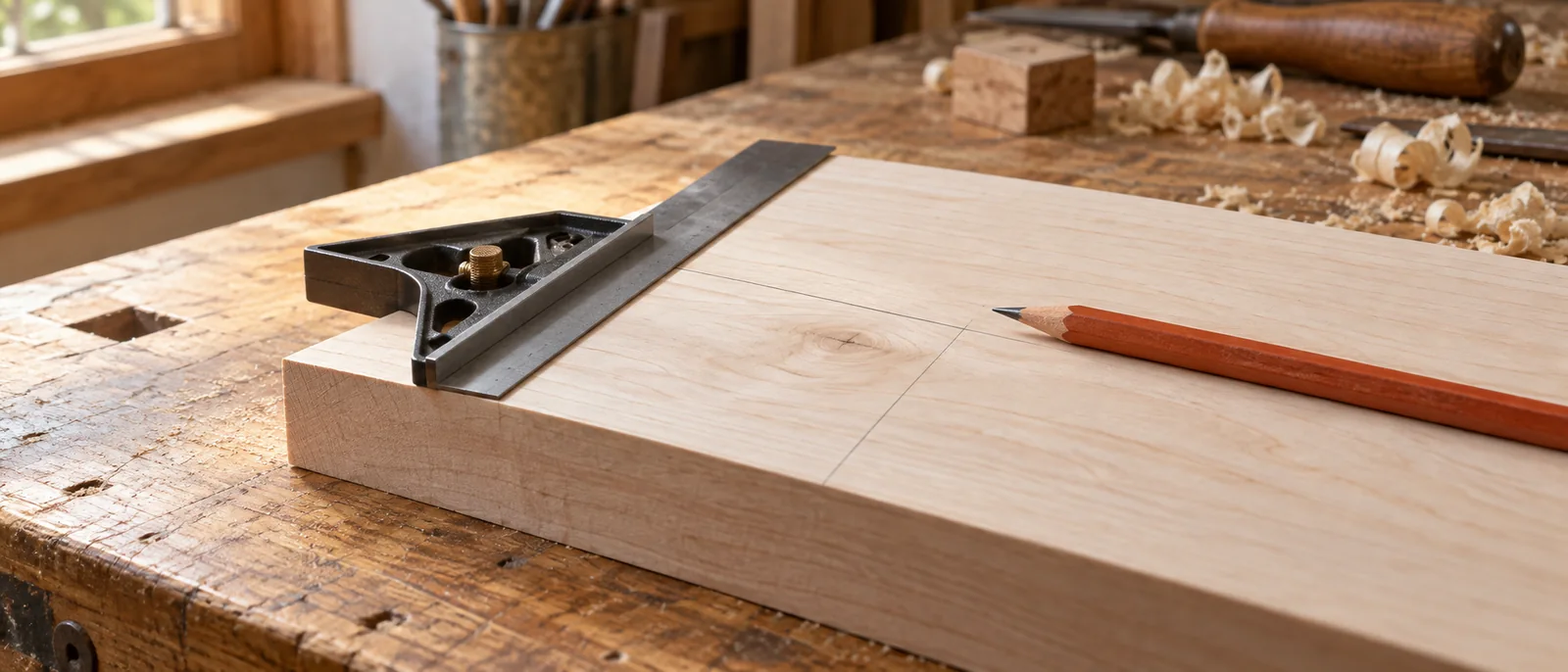
A measurement is only useful if you know exactly where it starts and what the mark means. Good layout makes those decisions visible before a tool touches the wood.
01 / WORKSHOP PRACTICEChoose a reference face and edge
Inspect the stock and identify the prepared face and edge you will measure from. Mark them lightly in pencil. Use those references consistently for connected measurements rather than switching sides each time you turn the board over.
A rough or curved edge is a poor reference for accurate layout. If the project depends on a straight, square surface you do not yet have, prepare it using an appropriate safe method or obtain prepared stock. Clear markings cannot correct unsuitable starting geometry.
02 / WORKSHOP PRACTICEMake one line you can read
Use a sharp pencil and make a deliberate mark rather than a cluster of strokes. Carry the mark with a suitable square when the operation calls for a square cut. Indicate the waste side so the line has an unambiguous meaning.
For example, if two parts need to finish at the same length, a thick pencil band invites two different interpretations. Decide how your cut will relate to the mark, allow for the blade's kerf, and check the resulting first part. Do not assume the center of a wide line is accurate enough.
03 / WORKSHOP PRACTICECompare matching parts directly
When parts must match, direct comparison can reveal differences that are easy to miss while repeatedly reading a tape. Align them against the same reference and check their ends. Keep the plan's intended finished dimensions in view as you do this.
A story stick—a scrap marked with key positions—can help transfer repeated locations without rereading each number. Label its purpose and reference end. It is a layout aid, not a cutting jig, and it should be checked before an error is repeated across several parts.
04 / WORKSHOP PRACTICEVerify before repeating the work
Read the plan's units, check the reference end, and confirm that the mark belongs to the correct part. Pause whenever a number seems inconsistent with the drawing. Correct the working notes clearly instead of leaving two competing dimensions on the page.
Check the first completed piece before marking or making the full batch. If it does not fit as expected, identify whether the problem began with the stock, the measurement, the mark, or the operation. Changing several things at once makes the cause harder to find.
Your workshop checklist
Tick these off as you prepare. Checks reset when you reload.
Slow down where a decision becomes a mark. Once the layout is clear, the rest of the work has a much better chance of following it.
Make it a great day in the shop.