
Raised Beds or Containers? Choose What Fits Your Space
Compare access, root space, drainage, and everyday care before choosing where your plants will grow.
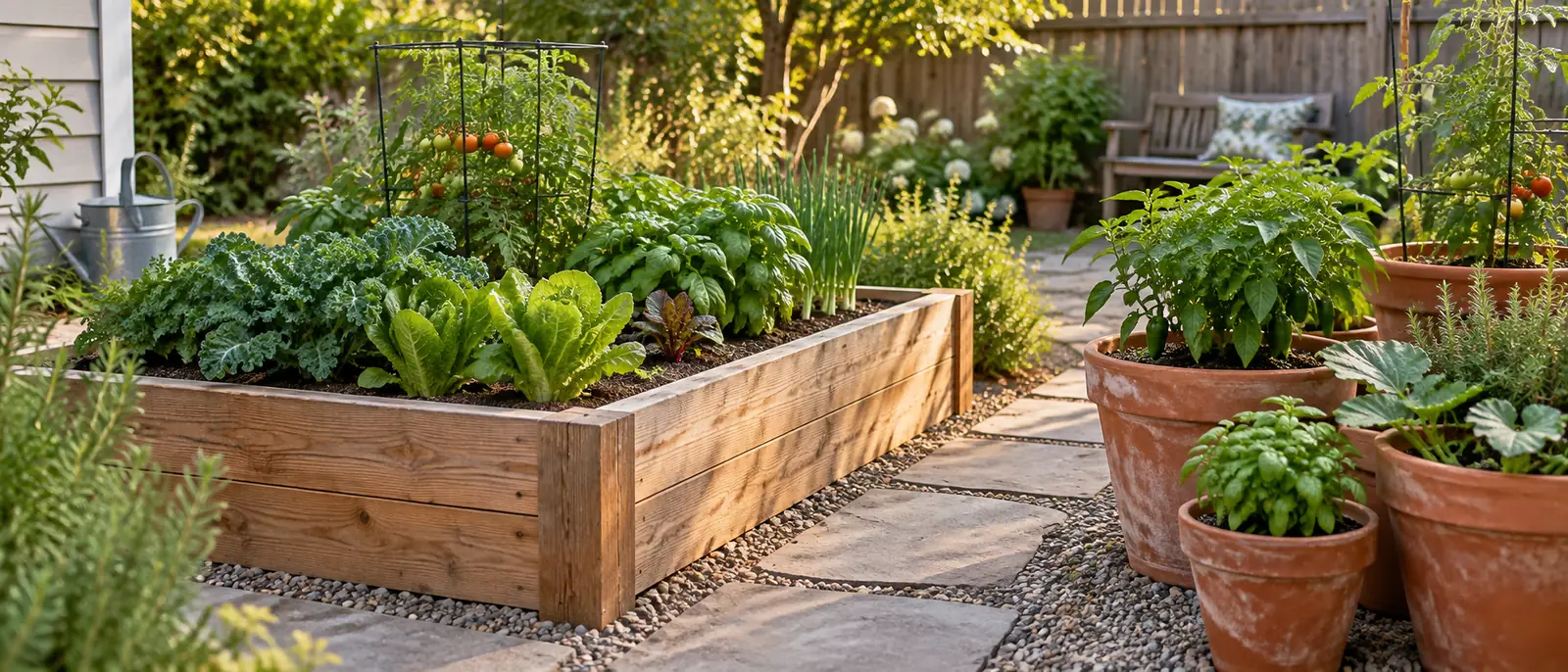
A timber bed and a row of large pots can both make a useful garden. The better choice depends on the space, the plants, and how you will care for them after the excitement of planting day has passed.
01 / GARDEN PRACTICEStart with access and location
A raised bed defines a growing area and can make an existing garden easier to organize. Containers can make use of patios and other places without an open soil bed. Neither option changes a crop's need for suitable light, root room, and care.
Mark the footprint before buying materials. Check that you can reach the plants without stepping into the bed and move around the space comfortably. For a balcony or elevated deck, confirm that the structure can safely carry filled, watered containers; wet growing media are heavy.
02 / GARDEN PRACTICEMatch the growing medium to the system
Containers need drainage openings and a suitable container growing mix. Packing ordinary garden soil into a pot can produce poor drainage and aeration. Raised beds open to the ground are a different system; select an appropriate bed soil blend rather than assuming the same mix and depth fit every situation.
Ask suppliers what their product is intended for and where bulk soil comes from. Work out the volume before ordering. If contamination is a concern at the site, get local advice on testing and separation instead of assuming a wooden border makes the underlying soil irrelevant.
03 / GARDEN PRACTICEThink about the mature plant
Choose container volume and bed spacing around the crop's mature roots and canopy. A compact variety can be a better match for limited room than a plant that will quickly outgrow its pot. Install suitable supports while plants are young, before roots and stems occupy the working space.
Draw the mature outline of each plant on your plan. Leave enough room to inspect leaves and harvest without squeezing between pots. A neat row of young seedlings can conceal a crowded summer layout, especially when climbing and sprawling crops are involved.
04 / GARDEN PRACTICEChoose the maintenance you can manage
Containers may dry faster than an in-ground bed, particularly in hot or windy weather. Check each planting rather than watering every pot by the same timer setting. Both systems require attention to moisture, drainage, and the nutrient needs of their crops.
Start with one bed or a few well-chosen containers and observe a full season. Record which plants were easy to reach and which required constant attention. You can combine the systems later: a bed for larger crops and separate pots for plants that need different treatment.
Your garden checklist
Tick these off as you prepare. Checks reset when you reload.
Choose the system you can care for consistently. The best garden container is not the prettiest empty one; it is the one that gives the finished plant enough room to thrive.
Further reading: University of Maryland Extension: container vegetable gardening.
Make it a great day in the garden.