
Water the Roots: Better Watering Habits for Your Garden
Use soil moisture, weather, and plant needs to decide when and how to water.

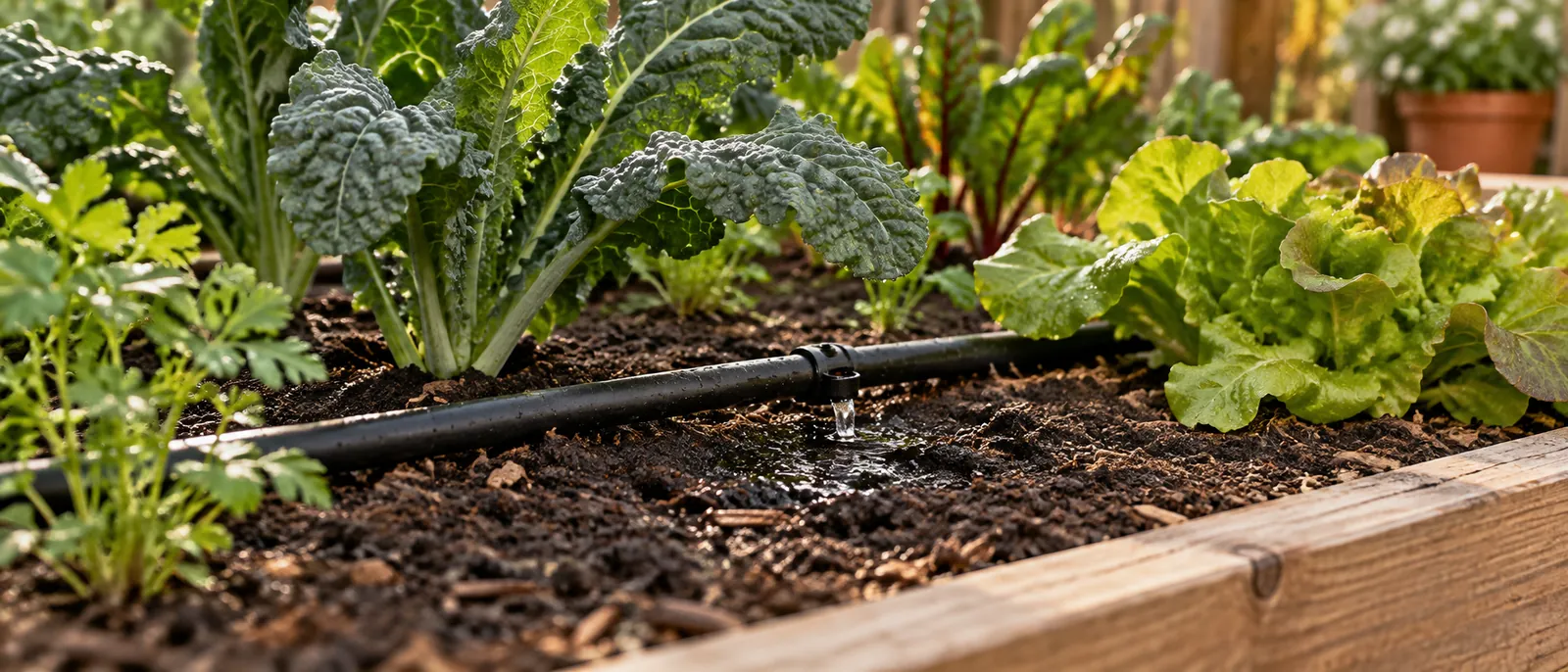
A dry-looking soil surface does not tell the whole story, and a fixed watering schedule cannot see yesterday's rain. Make checking the growing area part of the routine before reaching for the hose.
01 / GARDEN PRACTICECheck where the roots are growing
Examine moisture below the surface, taking care not to disturb roots. Compare more than one part of the bed. Seed trays, recent transplants, established vegetables, and containers do not all have the same root zone or tolerance for drying.
Choose a few repeatable places to check and note what you find. If one area remains wet while another dries rapidly, investigate the soil, shade, and irrigation coverage. Adding more water everywhere can make the wet spot worse without fixing the dry one.
02 / GARDEN PRACTICEDeliver water to the soil
Direct water near the root area instead of routinely spraying leaves. A watering wand, soaker hose, or drip system can help, depending on the planting. Apply water at a rate the soil can absorb rather than letting it run into a path.
After a session, check how far the moisture reached instead of judging only by the surface color. A system can look busy while delivering uneven coverage. Inspect emitters and connections, and adjust the setup when plant size or bed layout changes.
03 / GARDEN PRACTICEUse weather as information
Rainfall, heat, wind, soil type, and the stage of growth affect demand. General weekly water figures are starting points, not universal targets. Check local crop guidance and actual soil conditions. Watering in the morning is often practical, but a stressed plant should not wait solely for a preferred clock time.
Keep a rain gauge where it can collect rainfall properly and make brief notes during unusual weather. If leaves wilt, check moisture before watering again; wilting can have causes other than dry soil. Seek help when symptoms persist despite apparently suitable conditions.
04 / GARDEN PRACTICEBuild a routine you can verify
Walk the bed after changing an irrigation timer or moving a hose. Look for disconnected lines, clogged outlets, puddles, and pots that received no water. Give seedlings gentle delivery so their growing medium is not washed away.
Before going away, test the arrangement and show the person helping you how to check moisture. Write crop-specific notes instead of leaving one instruction to water everything daily. A routine that includes observation can adapt when the weather changes unexpectedly.
Your garden checklist
Tick these off as you prepare. Checks reset when you reload.
Let the garden tell you when the routine needs to change. A few minutes checking the soil can be more useful than another automatic cycle.
Further reading: University of Minnesota Extension: gardening in hot weather.
Make it a great day in the garden.