
A Simple Scrap-Wood Storage System
Keep useful offcuts visible and easy to find without letting the scrap pile take over the workshop.

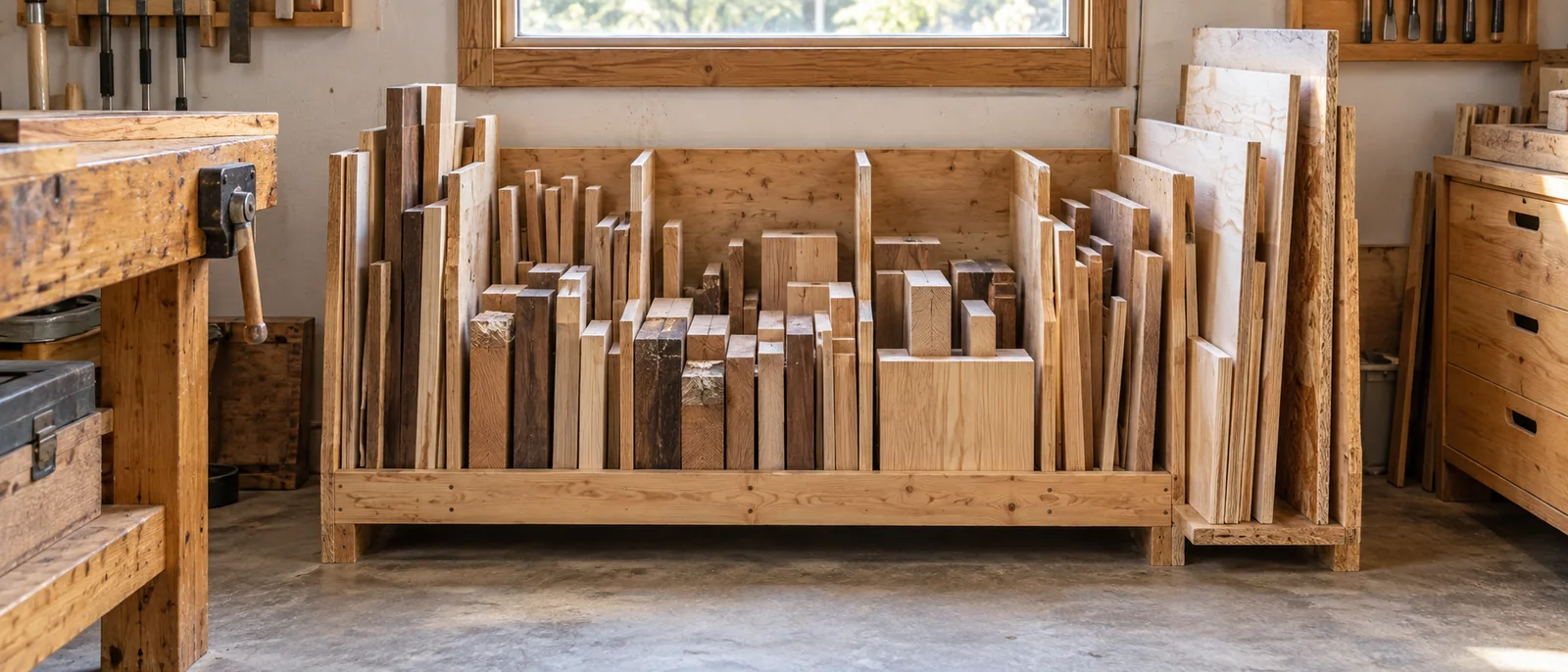
A scrap pile promises future projects, but only if you can find the right piece when you need it. The useful system is the one you can keep sorted after an ordinary afternoon of work.
01 / WORKSHOP PRACTICEChoose what earns a place
Empty one manageable section of the pile and inspect it. Separate sound offcuts from damaged pieces, mystery materials, and items containing hardware. Do not run reclaimed stock through machinery until it has been properly inspected for embedded metal and other hazards.
Choose a practical minimum size based on what you actually make. Someone who builds small boxes may use pieces that are pointless for cabinet work. Keep a modest box for finish samples and test cuts, then give yourself permission to stop saving every sliver.
02 / WORKSHOP PRACTICESort into a few useful groups
Start with long narrow pieces, short solid-wood offcuts, and sheet-material remnants. Separate species or thicknesses when doing so makes retrieval easier. Use a small number of clear labels instead of an elaborate filing system that takes longer to maintain than to use.
Mark known species and thickness on the end or a hidden face. Keep useful scraps from the current build together until the project is complete; they may help with matching a repair, testing a finish, or making a replacement part. Unknown wood should stay labeled as unknown.
03 / WORKSHOP PRACTICEContain it securely
Choose storage suited to the material's size and weight. Keep heavy pieces low, support stock adequately, and follow the rack or shelf maker's load and mounting instructions. If storing pieces upright, contain them so they cannot tip or slide into the walking space.
Keep the floor, exits, outlets, and access to tools clear. Avoid loose piles above a bench or machine. Sheet remnants deserve their own supported area; leaning a slippery stack against a wall is not a dependable storage plan.
04 / WORKSHOP PRACTICESet a limit and revisit it
Give each group a defined container or section of rack. When it is full, sort it before adding another box. A storage limit makes you choose the pieces that have an identifiable use rather than quietly turning the workshop into a warehouse.
Before buying wood for a small non-structural project, check the labeled stock. At the end of the build, return useful offcuts to the right group. Dispose of unwanted material through a suitable local waste route; do not assume painted, treated, or unidentified wood is suitable firewood.
Your workshop checklist
Tick these off as you prepare. Checks reset when you reload.
You do not need to save less useful wood. You need to make useful wood easier to recognize, reach, and put to work.
Make it a great day in the shop.