
A Small Workshop That Actually Works
Make room for the work you do, with a clear bench, useful storage, and an easier path through each project.

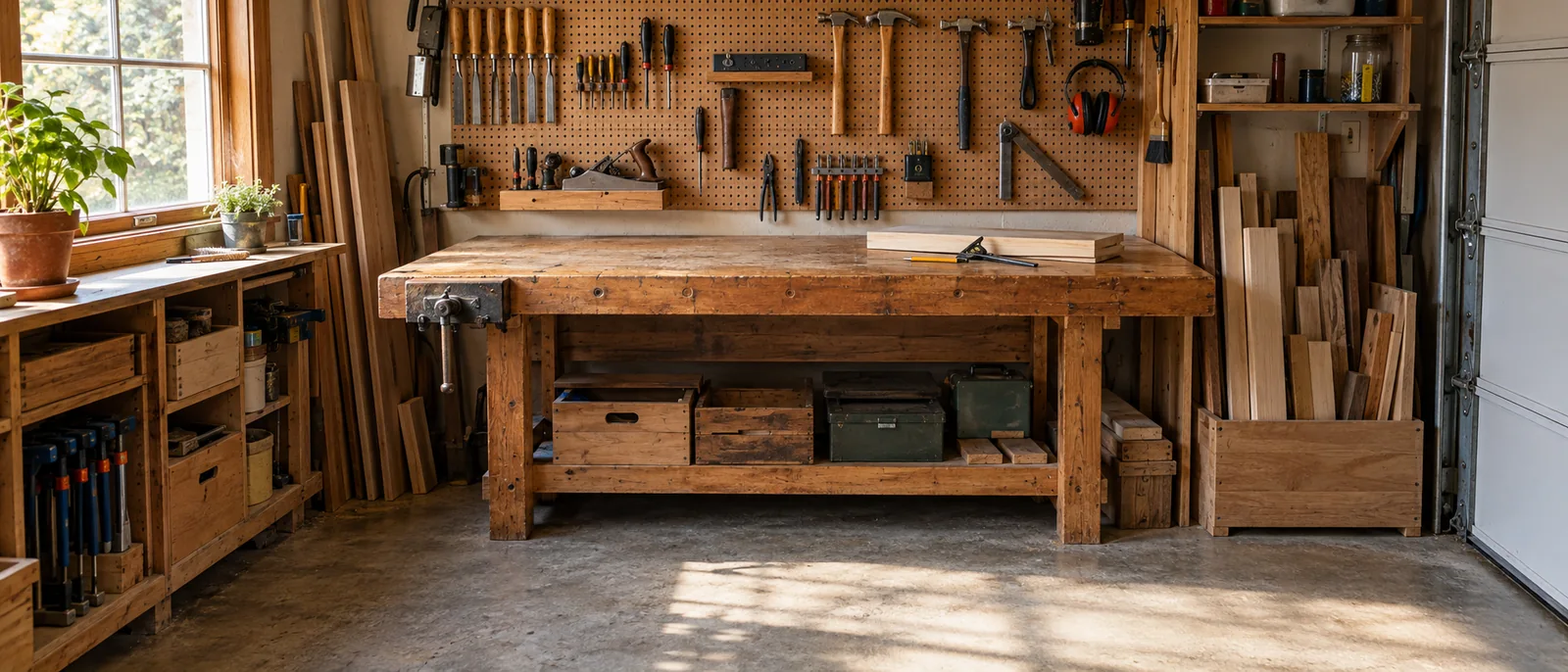
A useful workshop does not have to fill a two-car garage. It needs enough clear space for the job in front of you, and a sensible place for the things you reach for most.
01 / WORKSHOP PRACTICEStart with one real project
Before rearranging the shop, picture something you actually build. Where will the boards arrive? Where will you mark the parts, work on them, and put the assembly while it dries? Sketch that route on paper. A layout that looks tidy can still make every step awkward.
Pick one bottleneck to fix first. If your measuring tools share a drawer with loose hardware, separate them. If unfinished projects occupy the bench, give them a temporary shelf. Small changes are easier to judge than moving everything in one afternoon.
02 / WORKSHOP PRACTICEProtect a clear working surface
Treat the main bench as working space rather than permanent storage. Keep a small tray for the current project's pencil, square, tape, and hardware. Move the tray when you need the whole surface. Parts that belong to another build should live somewhere else.
Leave room around the work as well as on top of it. Check the space needed to handle your material and use each tool according to its manual. A folding table can be useful for light assembly, but it must be stable and suitable for the load; it is not automatically a safe machine stand.
03 / WORKSHOP PRACTICEStore by frequency of use
Put everyday marking and measuring tools near the bench. Group sanding supplies by grit, and keep small hardware in labeled containers. Rarely used items can go farther away. The goal is to find a familiar tool without emptying a box to reach it.
Use wall storage only where it can be mounted securely. Keep heavy items low and avoid hanging tools where they could fall onto a working machine. Do not cover outlets, block access to safety equipment, or turn a walking route into a lumber rack.
04 / WORKSHOP PRACTICEEnd with a short reset
At the end of a session, return the tools, label unfinished parts, and write the next step on the plan. Clear tripping hazards and manage dust with equipment suitable for your tools and materials. Keep finishing products in the conditions specified on their labels.
Try the layout for a few builds before adding more storage. Notice what keeps landing on the bench and what you keep walking across the room to fetch. Let those observations guide the next change. A good small shop earns its layout through use.
Your workshop checklist
Tick these off as you prepare. Checks reset when you reload.
Start with one clear bench and one better place for a frequently used tool. That is enough to make your next session feel different.
Make it a great day in the shop.